Historical context
Jefferson, Korais and modern Greece
In 1823, in the third year of the Greek Revolution, the Greek scholar Adamantios Korais asked Thomas Jefferson for advice on constitutional government for the emerging Greek state.
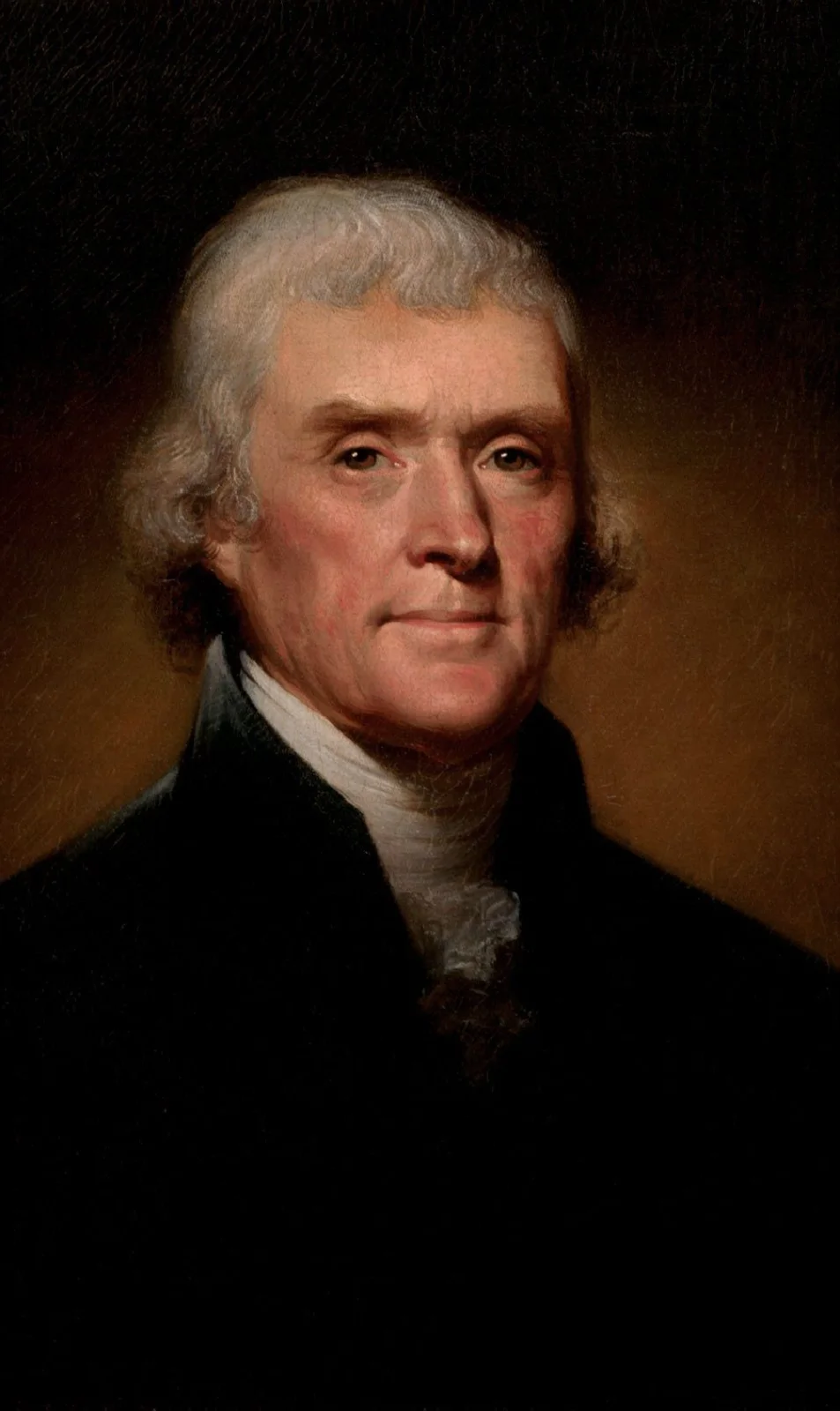
The statesman
Jefferson (1743–1826) was the principal author of the Declaration of Independence, the first Secretary of State, and the third President of the United States. He founded the University of Virginia and designed its campus, as he had designed Monticello.
A lifelong reader of Greek and Latin, he drew on the architecture and political thought of the classical world in shaping the institutions and buildings of the new nation.
The correspondence
Four letters
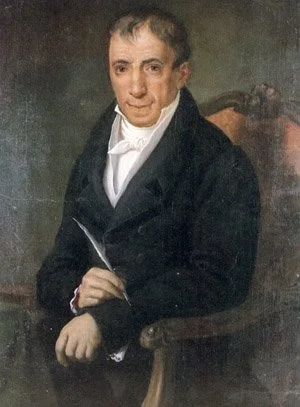
Korais (1748–1833) and Jefferson had met in Paris when Jefferson was American minister to France. Jefferson replied from Monticello with a long account of the American system, including representation, the two houses of the legislature, the judiciary and public education. He advised careful selection from American experience rather than wholesale adoption. Korais wrote twice more, the second time urging the United States to recognize Greek independence. Their exchange gives the Jefferson portrait its particular significance in Athens.
Each letter is linked to its transcription at Founders Online, National Archives. Korais wrote in French and signed his letters “Coray,” the spelling used in the archive.
A fuller account
Jefferson and slavery
Jefferson’s legacy includes his ownership of enslaved people. According to the Thomas Jefferson Foundation, he enslaved more than 610 people during his lifetime.
Source: Slavery at Monticello: Introduction, Thomas Jefferson Foundation.